
What is the purpose of pain and suffering in a Christian’s life?
Submitted in partial fulfillment of the requirements for the completion of SEMI 500-CO5 Introduction to Seminary Studies by Joyce Gerald October 5, 2014
Contents
Influential Experiences of Suffering and Pain That Impacted Lewis. 2
Second Influential Experience – Injured in World War I 2
Third Influential Experience – The Death of His Wife. 2
What Were the Result of These Influences?. 3
Biblical Foundations Related to Suffering and Pain. 4
Biblical Foundations – Lewis’ Experiences with Suffering and Pain. 4
Suffering and Pain Enhances a Christian’s Faith. 6
Suffering and Pain Shows God as Protector and Provider 11
Introduction
The topic of this paper is the purpose of suffering and pain in a Christian’s life. Human beings experience suffering and pain. Suffering and pain impact the beliefs of many believers. It also provides atheists with the ammunition that they need to deny the existence of God. Many Christians do not expect to experience suffering and pain after conversion. Some Christians will cite scriptural references to support this position.[1] However, the Bible does not guarantee Christians a life free from suffering and or pain.[2] With this in mind, how does a Christian come to terms with the suffering and pain they experience in their walk with Christ? How do they explain the suffering and pain that they live with to the outside world and their family members who are not Christians?
There is ample evidence that Christians do, in fact, experience suffering and pain.[3] The I Peter 4 (NIV) book addressed suffering and identified it as an event that all Christians will experience.[4] C. S. Lewis experienced pain and suffering in his life. Lewis developed a personal viewpoint of suffering and pain, as evidenced in his writings. [5] This paper’s writer will argue that suffering and pain in a Christian’s life enhances faith and trust in God as their protector and provider.
Influential Experiences of Suffering and Pain That Impacted Lewis
The first influential experience of Lewis that led to his thoughts on the topic of pain and suffering was the death of his mother. The death of Lewis’ mother and the emotional pain experienced due to the loss, in addition to being sent to boarding school, led Lewis to become an atheist.[6] Due to his mother’s death, Lewis simultaneously experienced an emotional distance between himself and his father. Lewis had no emotional support to enable him to process the loss of his mother.[7] World War I also resulted in suffering and pain for Lewis.
Second Influential Experience – Injured in World War I
Lewis suffered grief and loss when he returned from World War I after being critically injured.[8] The author was a brilliant scholar who had difficulty finding individuals who were of the same intellectual caliber. However, Lewis found such a person who became his wife. However, this union resulted in Lewis’ third experience with grief.
Third Influential Experience – The Death of His Wife
Lewis met and married an American writer who was just as brilliant as he was, and they were both Christians.[9] In her, Lewis found an intellectual and spiritual soul mate. Lewis wrote A Grief Observed after the loss of his wife to cancer. Lewis posited, “A Grief Observed” is a stark recounting of one man’s attempts to come to grips with and, in the end, defeat the emotional paralysis of the most shattering grief of his life.”[10]
Lewis became an atheist because the challenges of evil in the world overwhelmed him, and he could not accept the fact that a loving God could allow His children to suffer so much pain.[11] He discovered answers to these troubling thoughts as his exegesis of the scriptures provided answers to the question, “What is the purpose of suffering and pain in a Christian’s life?”
What Was the Result of These Influences?
Lewis penned the book The Problem with Pain to resolve some of the conflicts he experienced with the topic. While Lewis was an atheist, Lewis considered the universe a cold, dark, and empty place. However, now that Lewis was a Christian, the book proffered clarity for believers struggling with the construct of a loving God and His allowance of suffering and pain. He identified God as loving, omnipotent, and omnipresent. Although he was an atheist, the juxtaposing of suffering and pain with a loving and caring God presented itself as an oxymoron in his thought process.
The book clarified this position for the reader. Lewis states, “Pain would be no problem unless, side by side with our daily experiences of this painful world, we had received what we think a good assurance that ultimate reality is righteous and loving.” [12]
With this in mind, how does a Christian come to terms with the suffering and pain they will experience in their walk with Christ? How do they explain the suffering and pain that they live with to the outside world and their family members who are not Christians? How did Lewis resolve those dichotomies in his writings?
Lewis contended, “If God were good, He would wish to make His creatures perfectly happy, and if God were almighty He would be able to do what He wished. But His creatures are not happy. Therefore God lacks either goodness, or power, or both.”[13] The statement Lewis posited is the problem many Christians have with suffering and pain. Lewis offered a resolution to the situation based on his experiences with suffering, pain, and grief.
Biblical Foundations Related to Suffering and Pain
Biblical Foundations – Lewis’ Experiences with Suffering and Pain
The biblical or theological foundation that led to Lewis’ thoughts on pain and suffering is that God is pure and good.[14] God also wants the best for his children. This realization did not come about until Lewis left the construct of atheism and returned to Christianity. The understanding of pain and suffering is problematic for non-believers, but Lewis considered this construct explainable within the confines of the Christian belief system. He argued,
My argument against God was that the universe seemed so cruel and unjust. How did I get this idea of just and unjust? A man does not call a line crooked unless he has some idea of a straight line. What was I comparing this universe with when I called it unjust? Thus, in trying to prove that God did not exist—in other words, that the whole of reality was senseless—I found I was forced to assume that one part of reality—namely my idea of justice—was full of sense. Consequently, atheism turns out to be too simple. If the whole universe has no meaning, we should never have discovered that it has no meaning.[15]
Lewis recounted his experiences with suffering and pain in his book about these two events in a Christian’s life. He proffered an argument that two forces in this world exist parallelly.[16] Those forces were good and evil. The existence of good and evil in this world and humanity’s interactions with both forces impact their understanding of why humans must experience pain and suffering.[17] A believer’s interaction with the forces of good and evil results in grief and pain.[18] Scripture posited such an example in the book of Job. Job experienced suffering and pain to an intensity not paralleled anywhere else in the Bible.
Again, the necessity of suffering and pain is foreign to the atheistic mind. However, Christians reference the experiences of Joseph, the son of Isaac, and what Joseph said to his brothers when he revealed himself to them. Joseph clarified that God used their behavior towards him for good (Genesis 50:20). Lewis’ sentiments mirrored Joseph’s statement. Lewis spoke of God’s quietness when pleasurable events occurred in the lives of believers; however, at times, He used suffering and pain to bellow at the quietness of a Christian’s conscience to heighten their awareness of him in their lives.[19] Sometimes, this resulted in a miracle as an answer to prayers offered to release suffering and pain.
Lewis experienced unanswered prayers and his need for a miracle when his wife died. He believed in miracles and wrote extensively about them as the demonstration of a “living God” who used miracles to relieve the pain and suffering of His children.[20]
Lewis’s experiences with pain and suffering intertwined with his theological belief in the deity, sovereignty, and justice system of God.[21] Lewis identified that God wants to make humans His sons, but the process “would not have been painful or difficult if the human race had not turned away from God centuries ago. They were able to do this because he gave them free will: [Why would God do that?] He gave them free will because a world of mere automata could never love and therefore never know infinite happiness.”[22] Without free will, humanity could not reach its human potential and arrive at the state of oneness with God given to it by the death and resurrection of his Son; Lewis called this the grand miracle.[23] However, with free will, man is subject to the results of his decisions. [24] These decisions sometimes lead to pain and suffering.
Consequently, Lewis’ theological foundations stem from his understanding of the deity of God and humanity’s ability to choose how it lives its life. Keller described the process of growth that occurs as a result of pain and suffering as a horrible event that ends with eternal beauty.[25] A life focused on God as its savior and redeemer can still experience suffering and pain. Therefore, how do suffering and pain enhance a Christian’s life?
Suffering and Pain Enhances a Christian’s Faith
Old Testament Examples
Due to the space limitation, the author will focus on two specific Old Testament examples of suffering and pain. Job and Joseph are two Old Testament characters who demonstrate how their faith and trust in God grew due to suffering and pain. Regardless of the circumstances that they were in and the undue suffering and pain that they endured, they remained steadfast in their faith and trust in God
Job
The story of Job, as detailed in the Bible by a book of the same name, described Job as a wealthy man who loved God and aspired to live a righteous life. He despised evil with his whole being (Job 1:1). Lewis refers to evil as one of the two forces in the universe.[26] These forces were at work in the life of Job. Satan appeared before God and challenged him. Satan told God that if he took away everything that Job possessed, Job would remain faithful to or trust him. God told Satan to go ahead, “. . . but on the man himself do not lay a finger” (Job 1:12). This statement, “but on the man himself do not lay a finger,” demonstrates the limitations that God has placed on Satan and the provision he made to protect him. At this present time, during periods of suffering and pain, Christians have that same assurance from God. Satan took all that Job possessed in this world, including his family. Job was devastated by the suffering and pain; however, He saw them as an opportunity to demonstrate his theological foundations. Job acknowledged that everything he had come from God and that it was his to take at any time (Job 1:21). During this entire ordeal, Job did not sin against God (v. 22).
However, Job’s period of suffering and pain was not concluded. Satan came before God once again and argued that if he afflicted Job’s body, he would turn from God. The Lord stated, “Very well, then, he is in your hands; but you must spare his life” (Job 2:6). Satan gave Job a disease of sores and boils (v. 8). Job had nothing left. Nonetheless, Job maintained his faith and trust in God as his protector and provider. His theology was a living theological construct. [27] He did not waiver in his faith. Despite all the pain and suffering Job endured, the Bible states that Job’s faith, trust, and understanding of God increased as he developed a personal relationship with God (Job 42:5).
Joseph

Joseph was the firstborn son of Rachel (Genesis 30:23-24). The concept of Joseph being the, “. . . son of his [Jacob’s] old age”, presented a dysfunctionality within the family that resulted in jealousy and envy (Gen. 37:3-5). Jacob praised Joseph more than his other sons and gave him a unique coat of many colors (vs. 5). This action added to the brothers’ rivalry, jealousy, and envy. The brothers were also jealous because Joseph articulated the prophetic dreams that God sent to prepare his family for the future that they were about to face (vs. 5-10).
The interpretation of the dreams indicated that Joseph would be a great leader, and all family members would bow down before him. Even his father was incensed by the interpretation (Gen. 37). The brothers plotted against Joseph and sold him into slavery. Joseph experienced emotional suffering and pain due to the dynamics of his family, but now he was going to suffer separation and enslavement (vs. 18-25).
Joseph endured numerous hardships during his enslavement. One of those hardships culminated in Joseph’s incarceration for something he did not do (Gen. 39). At no point during these events did Joseph demonstrate misgivings of his faith in God. His future was attached to the suffering and pain that he endured. The grief and pain opened doors for leadership and training that would not have opened had he stayed with his family (Gen. 40). Joseph used his gift of interpreting dreams to bring him closer to the goal God had designed for him.
While in prison, Joseph interpreted the dreams of two members of the Pharaoh’s Staff (Gen. 40). One of them was the Pharaoh’s Cup-bearer. Joseph’s trust in the Cup-bearer culminated in his becoming the ruler of Egypt. Joseph’s suffering and pain saved the nation of Egypt and prevented the starvation of his family and the world (Gen. 42-44). Through this instance, Christians understand that sometimes suffering and pain benefit others and themselves.
The Bible concluded Joseph’s story with this statement, “You intended to harm me, but God intended it for good to accomplish what is now being done, the saving of many lives” (Gen 50:20). The end of Joseph’s story is reminiscent of the sentiments that Lewis presented in The Great Divorce. Lewis stated, “. . . . evil can be undone, but it cannot ‘develop into good’. . .”.[28] The book ends with reflections on heaven and hell. It implied that human beings have a deep desire for heaven, but their spirit is too weak to endure the suffering and pain that presents itself to them daily. Through this example of Joseph, Christians understand that sometimes their grief and pain benefit others and themselves. The Bible records many other examples of suffering and pain that end with a blessing for all involved (Hebrews 11).
New Testament Examples
The New Testament is replete with examples of people who endured suffering and pain for the sake of the Gospel. The Apostles all experienced and wrote about suffering and pain. The author will focus on the writings of three specific apostles: James, the brother of Jesus, Peter, and Paul.
James
James considered suffering and pain a part of the believer’s life. He said, “Consider it pure joy, my brothers and sisters, whenever you face trials of many kinds because you know that testing your faith produces perseverance. Let perseverance finish its work so that you may be mature and complete, not lacking anything” (James 1:2-4). James’ thoughts on suffering and pain indicated that it is a process that the believer must consider a joyful experience. He provided a progression from the testing of faith to completeness or maturity in Christ (vs. 4). Humanity does not see suffering and pain as a vehicle to completeness or maturity. At the same time, Peter presented a case of suffering and pain that is similar to James’s.
Peter
Peter encouraged believers to “greatly rejoice” while they are suffering and proposed that it, and trials, is an integral part of the Christian walk (I Pet 1:6). He continues by stipulating that suffering and trials come to prove the “genuineness” of the believer’s faith (vs. 7). Consequently, what is the purpose of suffering and trials? Peter proposed that sufferings and prosecutions refine believers like gold was refined by fire (vs. 7). He postulated that the end product of suffering and trials results in praise and glorifies Jesus Christ the Redeemer; in like manner, Paul suggested an explanation of suffering and pain similar to James and Peter’s.
Paul 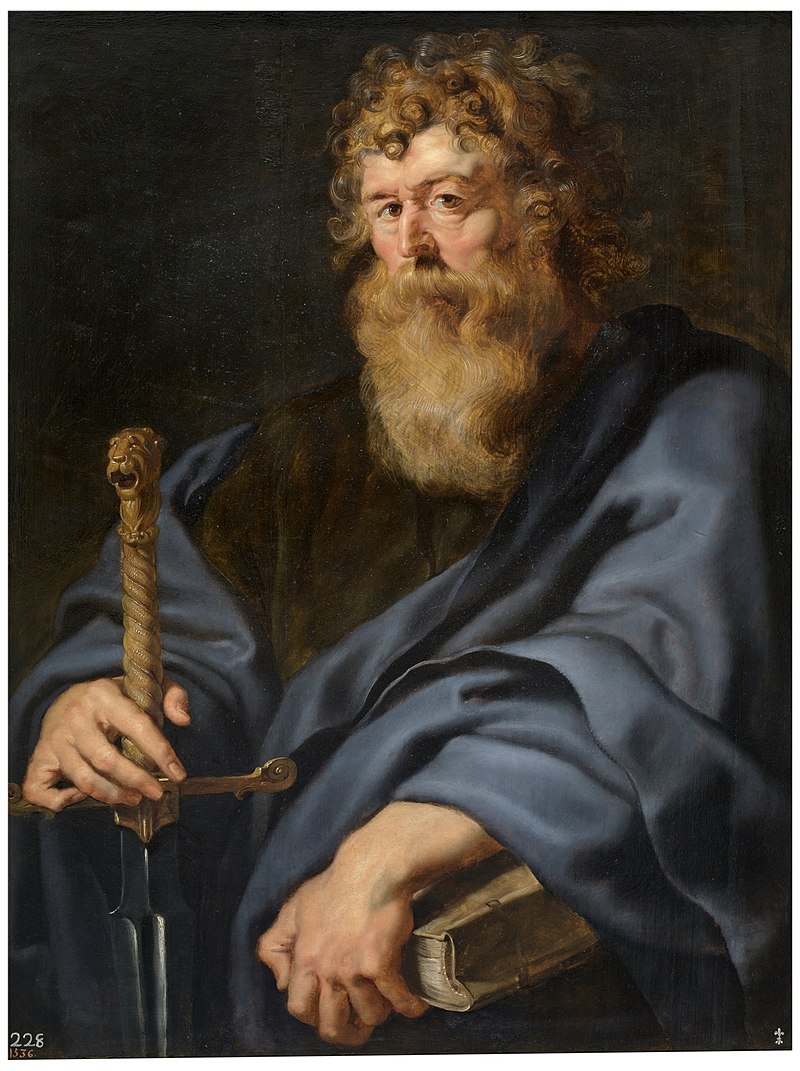
Paul, in his letters to the Romans, pointed to the fact that believers must prove an attitude of “glory’ when they are faced with tribulations [suffering and or trials] (Rom 5: 3). Moreover he, like James, revealed that suffering and trials were at the beginning of a process that “produces perseverance, character, and hope [or faith]” (vs. 4). According to Paul, this occurred because the love of God was poured into the hearts of all believers (vs. 5). In his letters to the Philippians, Paul chronicled his personal experiences with suffering and pain; he referred to the fact that they brought him a sense of contentment (Phil 4:11). He mentioned that he was able to endure those experiences because he did not rely on his strength (vs. 12). Paul reported that he had a “thorn in the flesh” that God would not remove (2 Cor 12:7-8). He recalled what The Lord told him, “My grace is sufficient for you, for my power is made perfect in weakness” (vs. 9). Paul mentioned, as both James and Peter did, that he would boast, or glory, in his infirmities because it led to the “power of Christ resting on him” (vs 9). He concluded, “That is why, for Christ’s sake, I delight in weaknesses, in insults, in hardships, in persecutions, in difficulties. For when I am weak, then I am strong” (v. 10). Paul’s statement implied that God used suffering and pain to grow his faith. Unlike the teachers described by Lewis in The Abolition of Man, when God taught, He spoke from his knowledge base.[29] His Word teaches that suffering and pain bring a believer to a deeper understanding of His will and strengthens their faith. The examples presented in both the Old and New Testaments confirmed and agreed with the thesis statement that suffering and pain do increase a believer’s faith. For a believer to develop faith, they must also trust God, “Trust in the Lord with all your heart and lean not on your own understanding; in all your ways submit to him, and he will make your paths straight” (Prov 3:5-6). In like manner, suffering and pain also teach the believer that The Lord protects and provides for his children.
Suffering and Pain Shows God as Protector and Provider
God the Protector
The Old and New Testaments demonstrated that suffering and pain developed the faith and trust of believers. In addition, the scriptures also proved that God protects his people during their grief and pain. He protected Job from Satan by establishing barriers of protection around Job (Job 1:12 and Job 2:6). Satan cannot cause the death of a Christian. He protected Joseph from prolonged incarceration by using his gift of interpreting dreams for the servants of Pharaoh. Not only did God provide protection for Joseph, but his protection of Joseph resulted in the protection of his servant Israel and the nation that would proceed from him. The entire Bible is replete with examples of God as the protector of His people.
Peter described the protection of God, “[Christians] who through faith are shielded by God’s power” (I Pet 1:5). Thus, Peter admonished Christians to be confident that their future is secure regardless of the pain and suffering that they were experiencing. Paul detailed for the church in Corinth the numerous floggings, perilous journeys, and dangers he endured (2 Cor 13:21-27). Paul described the protection that God provided by citing a list of hazards, “from Jews, Gentiles, in the city, in the country, at sea, [and even at the hand of] false believers” (vs 26). Paul provided those examples to inspire the Corinthians and appraise them that God remained their most excellent protector. If God had protected the saints of old, a generalization that He would preserve His saints today would have been tenable. In his book, Keller discusses protection and provides a contemporary example of suffering and pain.[30] Emily, a character in the book, admitted that she heard of God’s protection but never personally experienced it until she started her journey of suffering and pain.[31] At that point, the reader ascertained that God was faithful to His children and used suffering and pain to develop faith and trust in them. God also used suffering and pain to show His love for them by protecting them. The author presented the following facts about God and how He used suffering and pain to teach His children about God, the protector, and finally, God, the provider who strengthened the faith and developed the trust of His people.
God the Provider
Emily recalled that her image of God was minimal. [32] She affirmed that God was a distant figure, and she had an earthly father figure image[33]. Like Job, Emily lost everything she owned; however, Emily learned that God kept His promise of provision for her and her children.[34] Emily taught her children about faith in God and how His hand of provision worked in their lives; her grasp of the beauty and magnitude of the lessons learned from suffering and pain were evident in her discourse with her children.
In this horrible situation, where my whole identity and my family have been attacked, I see glimpses of what God is doing and how my life and our lives will be changed— and I get excited to see who I get to be at the end of all this. Like being in a race. . . You can’t go around it. You have to go through it— and the rain and the mud are weighing you down— you can’t go through it fast; you must concentrate on each painful step . . . but at the same time, something is keeping you upright and compelling you to continue. In the distance, you see what appears to be a sheet of rain (almost like a car wash rinse), and then you see it— the sun; it is perfectly clear . . . The person you will be there will be stronger, with more understanding of how to run this race, and with satisfaction /peace. . . I have explained it to my children like this: In every fairy tale, there is always a tragedy, and the protagonist faces that adversity, overcomes it, and thrives because of it. God is giving us our fairy tale— what do you see at the end?[35] In the same way, God provided for Job at the end of his life, He also provided for Emily. God will do the same for all of his children.
Conclusion
The author presented the following thesis question, what is the purpose of suffering and pain in a Christian’s life? The thesis statement stipulated that suffering and pain in a Christian’s life enhance faith and trust in God as their protector and provider. Examples of the work of C. S. Lewis proffered evidence that suffering and pain grows out of the present evil world; however, God used it to develop faith, trust, and made protection and provision for His children as they experienced the process of suffering and pain. Old and New Testament examples were offered to demonstrate that God does allow suffering and pain to afflict His children, but He limits its impact on their lives.
The current research on suffering and pain and its impact on the lives of Christians is not conclusive. However, the generalization that suffering and pain enhanced faith and trust as modern Christians experienced their walk with God was has demonstrated in this paper. Finally, the other generalization presented is that God protected and provided for His people throughout the Bible and does so today. The paper was limited in its scope of inquiry into the spiritual benefits of suffering and pain. The author ascertained that further qualitative research is needed in this area to support the spiritual benefits of suffering and pain in the lives of Christians.
Annotated Bibliography
“Clive Staples Lewis,” Bio.com. Last Modified July 21, 2014. Accessed September 23, 2014. http://www.biography.com/people/cs-lewis-9380969. This site provides an overview of C. S. Lewis’s life from childhood to adulthood.
Keller, Timothy J. Walking With God Through Pain and Suffering. New York, NY: Penguin Group, 2013. Keller presents a biblical answer for why there is pain and suffering in a Christian’s life, and a process of how to walk with Him when this occurs to you personally. It is considered the most recent book on the answer to the question of why Christians experience Pain and Suffering.
Lewis, C. S. The Abolition of Man. New York, NY: Harper Collins, 2002. This book addresses the teaching of English in the upper form (middle and high grades in the US) schools in the UK. It defends science but cautions against using it to set aside values.
Lewis, C. S. The Great Divorce. New York, NY: Harper Collins, 2002. This theological fantasy reflects the Christian concept of heaven and hell.
Lewis, C. S. A Grief Observed. New York, NY: Harper Collins, 2002. This book is a collection of Lewis’s reflections on the death of his wife.
Lewis, C. S. Mere Christianity. New York, NY: Harper Collins, 2002. Kindle. Mere Christianity is the written from of a series of radio discussions that were presented by Lewis during World War II. This is a theological work and is well known among Christian apologetics. This writer has heard Ravi Zacharias and other Christian apologetics make reference to it more than once on the radio.
Lewis, C. S. Miracles. New York, NY: Harper Collins, 2002. Lewis addresses the exactitude of miracles and whether or not they have occurred.
Lewis, C. S. The Problem of Pain. New York, NY: Harper Collins, 1996. Kindle. This book was written to provide an intellectual explanation for suffering and pain to Christians. The book also addresses and clarifies the concept of theodicy.
Lewis, C. S. The Screwtape Letters. New York, NY: Harper Collins, 2002. This satirical work could be classified as fictional as well as nonfiction because it addresses an issue that is believed only by Christians: the existence of hell and what happens to people when they arrive there.
Slick, Matt. “If God Is All Powerful and Loving, Why Is There Suffering in the World.” Carm.org. 2014. Accessed September 23, 2014. http://carm.org/if-god-all-powerful-and-loving-why-there-suffering-world . This article explains why God does not stop suffering in the world. It states eleven points to clarify the author’s assertion that humanity has the right to choose how it lives its life.
Notes
[1] Psalms 103:3 (NIV) “Who forgives all your sins and heals all your diseases.” Unless otherwise noted, all biblical passages referenced are in the New
International Version (Grand Rapids, MI: Zondervan, 1998).
[2] Romans 5:3: “Not only so, but we also glory in our sufferings.”
[3] R. C. Sproul, Surprised by Suffering: The Role of Pain and Death in The Christian Life
(Lake Mary, Fla: Tyndale House Publishers, 2009), 419-421, Kindle.
[4] I Peter 4
[5] C. S. Lewis, The Problem of Pain (New York, NY: Harper Collins, 2002), 1.
[6] Ibid., 485.
[7] Ibid., 486.
[8] “Clive Staples Lewis,” Bio.com, July 21, 2014, accessed September 23, 2014,
http://www.biography.com/people/cs-lewis-9380969.
[9] Douglas Gresham, introduction to A Grief Observed, by C. S. Lewis (New York, NY: Harper Collins,
2002), 652.
[10] Gresham, A Grief Observed, 652
[11] Lewis, The Problem of, 1.
[12] Ibid., 14.
[13] Ibid., 1.
[14] Ibid., 91.
[15] C. S. Lewis, Mere Christianity (New York, NY: Harper Collins, 2002), 37-38, Kindle.
[16] C. S. Lewis, The Screwtape Letters (New York, NY: Harper Collins, 2002).
[17] Ibid.
[18] C. S. Lewis, The Problem.
[19] Ibid.
[20] C. S. Lewis, Miracles (New York, NY: Harper Collins, 2002), 373.
[21] Ibid.
[22] C. S. Lewis, Mere Christianity, 183.
[23] Ibid., 398.
[24] Matt Slick, “If God Is All Powerful and Loving, Why Is There Suffering in the World,” Carm.org, 2014, section goes here, accessed September 23, 2014, http://www.carm,org/evidence/suffering.html.
[25] Timothy J. Keller, Walking With God Through Pain and Suffering (New York, NY: Penguin Group, 2013)
[26] C. S. Lewis, The Screwtape.
[27] C. S. Lewis, The Problem.
[28] C. S. Lewis, The Great Divorce (New York, NY: Harper Collins, 2002), 462.
[29] C. S. Lewis, The Abolition of Man (New York, NY: Harper Collins, 2002), 721.
[30] Keller, Walking With, 29.
[31] Ibid., 32.
[32] Ibid., 33.
[33] Ibid., 34.
[34] Ibid.
[35] Ibid., 33.
4 Therefore, since Christ suffered in his body, arm yourselves also with the same attitude, because whoever suffers in the body is done with sin. 2 As a result, they do not live the rest of their earthly lives for evil human desires, but rather for the will of God. 3 For you have spent enough time in the past doing what pagans choose to do—living in debauchery, lust, drunkenness, orgies, carousing and detestable idolatry. 4 They are surprised that you do not join them in their reckless, wild living, and they heap abuse on you. 5 But they will have to give account to him who is ready to judge the living and the dead. 6 For this is the reason the gospel was preached even to those who are now dead, so that they might be judged according to human standards in regard to the body, but live according to God in regard to the spirit. 7 The end of all things is near. Therefore be alert and of sober mind so that you may pray. 8 Above all, love each other deeply, because love covers over a multitude of sins. 9 Offer hospitality to one another without grumbling. 10 Each of you should use whatever gift you have received to serve others, as faithful stewards of God’s grace in its various forms. 11 If anyone speaks, they should do so as one who speaks the very words of God. If anyone serves, they should do so with the strength God provides, so that in all things God may be praised through Jesus Christ. To him be the glory and the power for ever and ever. Amen.
Suffering for Being a Christian
12 Dear friends, do not be surprised at the fiery ordeal that has come on you to test you, as though something strange were happening to you. 13 But rejoice inasmuch as you participate in the sufferings of Christ, so that you may be overjoyed when his glory is revealed. 14 If you are insulted because of the name of Christ, you are blessed, for the Spirit of glory and of God rests on you. 15 If you suffer, it should not be as a murderer or thief or any other kind of criminal, or even as a meddler. 16 However, if you suffer as a Christian, do not be ashamed, but praise God that you bear that name. 17 For it is time for judgment to begin with God’s household; and if it begins with us, what will the outcome be for those who do not obey the gospel of God? 18 And, “If it is hard for the righteous to be saved, what will become of the ungodly and the sinner?”[a] 19 So then, those who suffer according to God’s will should commit themselves to their faithful Creator and continue to do good.
Footnotes 1 Peter 4:18 Prov. 11:31 (see Septuagint)





 You Are Not the Only One